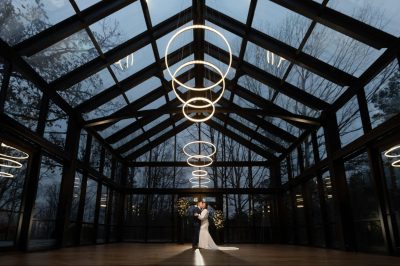
Using Patterns and Repetition to Elevate Your Wedding Photography
Patterns and repetition are powerful compositional tools in wedding photography. When used intentionally, they bring structure to busy scenes, guide the viewer’s eye, and turn ordinary moments into visually compelling images. From symmetry in architecture to choreographed moves from the wedding party on the dance floor, these elements exist naturally throughout a wedding day. You just have to know where (and how) to look.
Below are ten ways wedding photographers can use patterns and repetition to create stronger, more dynamic wedding images, inspired by real work from Wedding Maps photographers.
All of the images in this article are provided by the photographers at Wedding Maps and used with permission. Featured image by JCM Photography at the Glass House at Nichols Heir in Sevierville, TN, USA.
1. Scout With Pattern in Mind
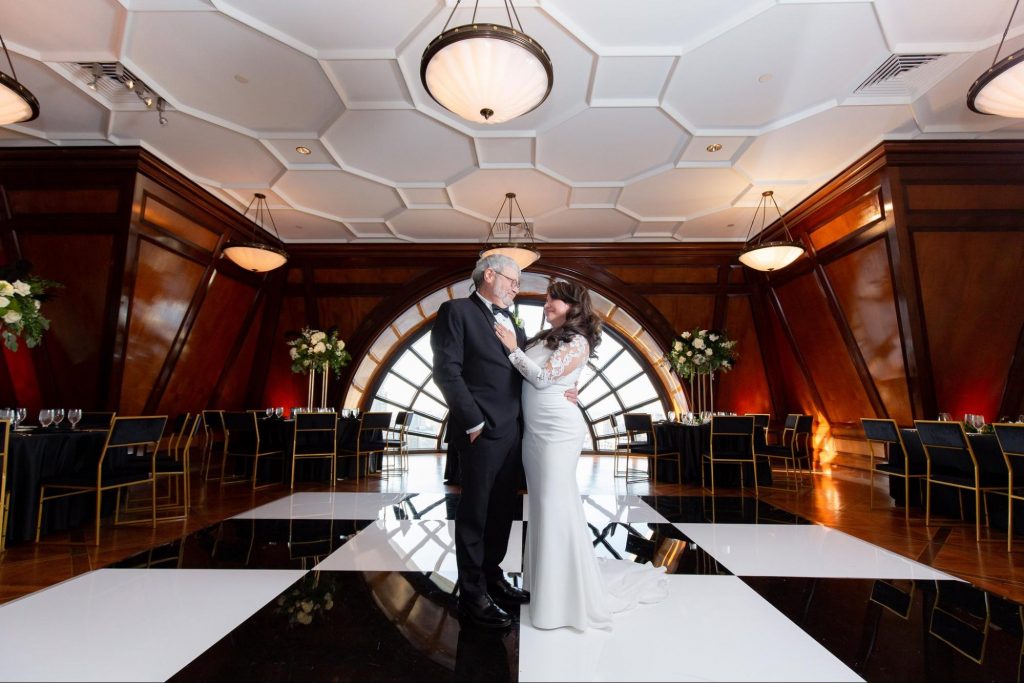
Photo by Stefani Ciotti at the Hotel Crescent Court in Dallas, TX, USA
When scouting locations, either ahead of the wedding day or during downtime, start looking specifically for areas with strong patterns. A row of windows, tiled flooring, textured walls, or even matching chairs can become the foundation for a striking shot. Training your eye to spot these design elements ahead of time will help you shoot with more intention and avoid scrambling for ideas in the moment.
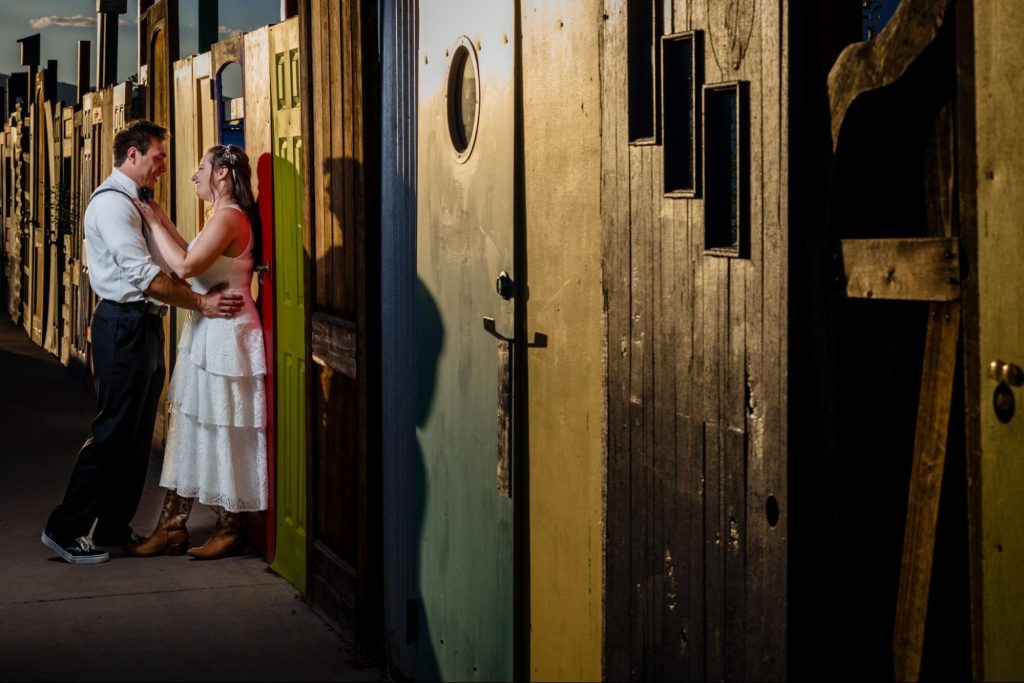
Photo by Gretchen Troop at the The Lyric in Fort Collins, Colorado, USA
Tip: Take a few test shots during prep or setup and flag them on your camera roll. You’ll already have a mental map of where to bring your couple for quick but powerful portraits.
2. Let Architecture Do the Heavy Lifting
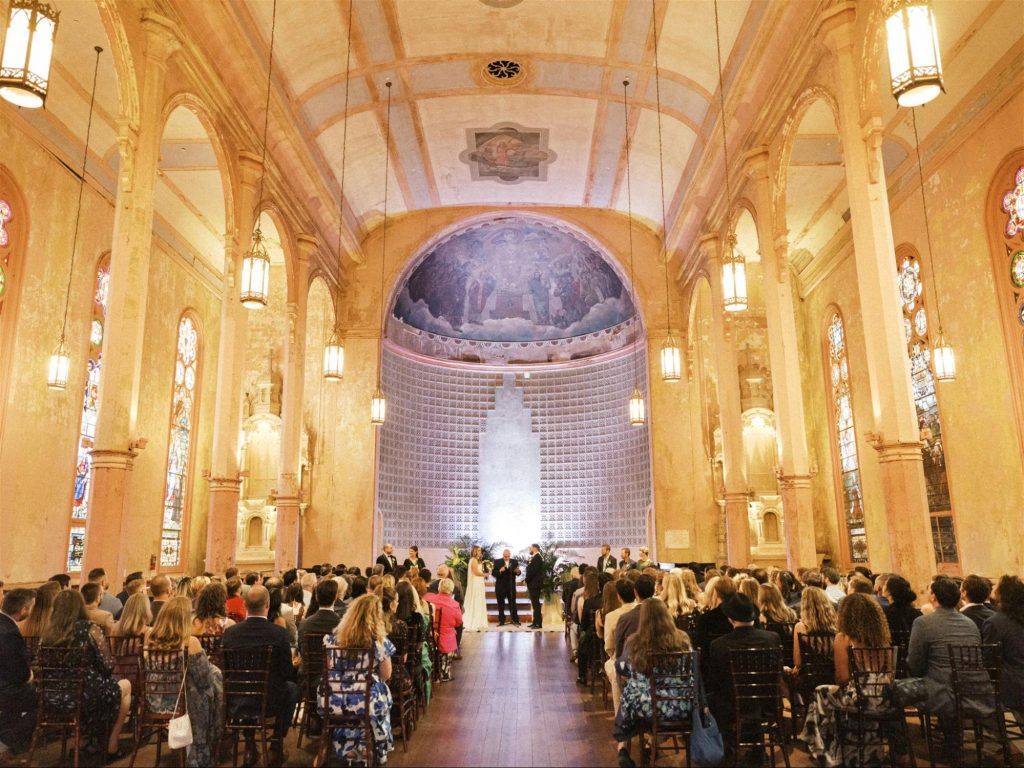
Photo by Francis Sylvest at the Hotel Peter & Paul in New Orleans, Louisiana, USA
Buildings are one of the easiest places to find repetition. Columns, arches, windows, doorways, and ceiling details naturally create rhythm within a frame. Position your couple centrally for symmetry, or place them deliberately off-center to add tension. Wide lenses work well here, especially during ceremonies or portraits where scale and balance matter.
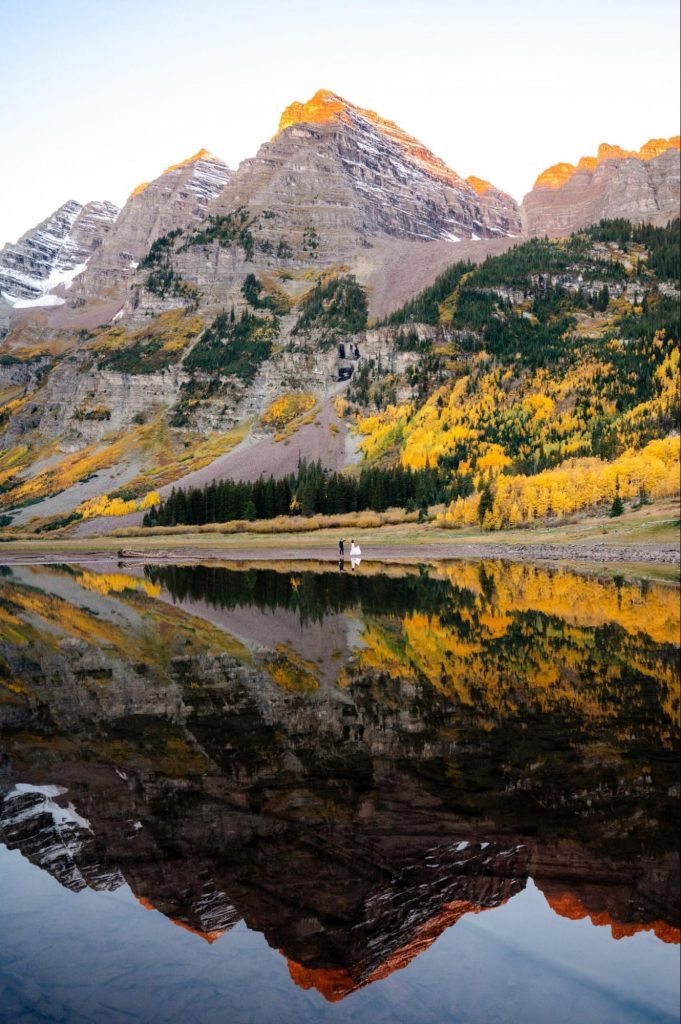
Photo by Authentic Collective at the Maroon Bells Scenic Area, in Aspen, Colorado, USA
Tip: Step back farther than you think. Patterns often reveal themselves best when you give them space.
3. Use Perspective Patterns to Pull the Viewer In
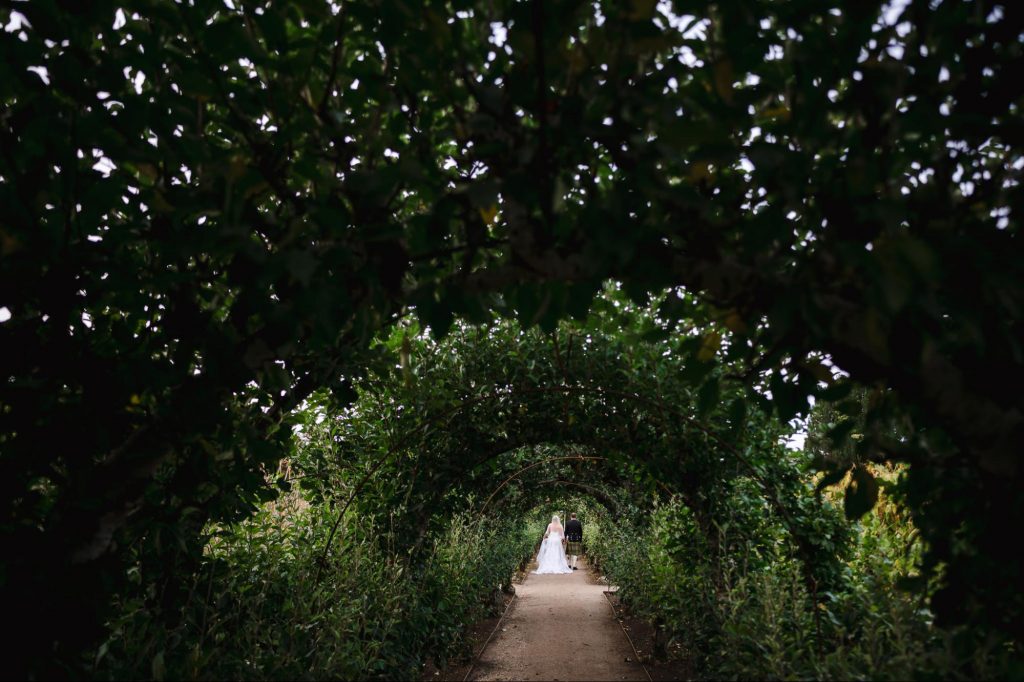
Photo by Jake Timms Photography at the Gardens Of Heligan in Cornwall, United Kingdom
Walkways, aisles, bridges, piers, and archways create repetition through depth. These receding elements naturally draw attention toward your subjects. Try placing the couple at the vanishing point, or photograph them walking through the scene to add subtle motion.
Tip: Shoot both wide and mid-range versions, one for scale, one for intimacy.
4. Find Repetition in People, Not Just Places
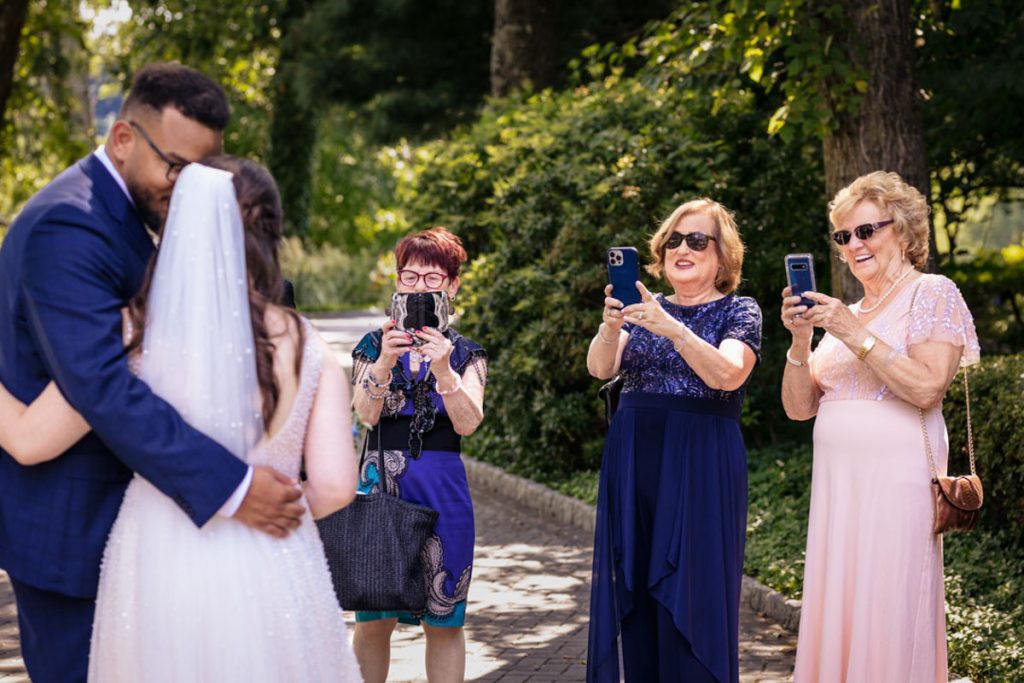
Photo by Gen Palmer at The Estate at Eagle Lake in Chesterfield, NJ, USA
Weddings are full of repeated human behavior. Guests holding phones, bridesmaids carrying bouquets, kids standing in a row, or friends raising glasses together all create organic patterns. These moments work especially well during candid portions of the day.
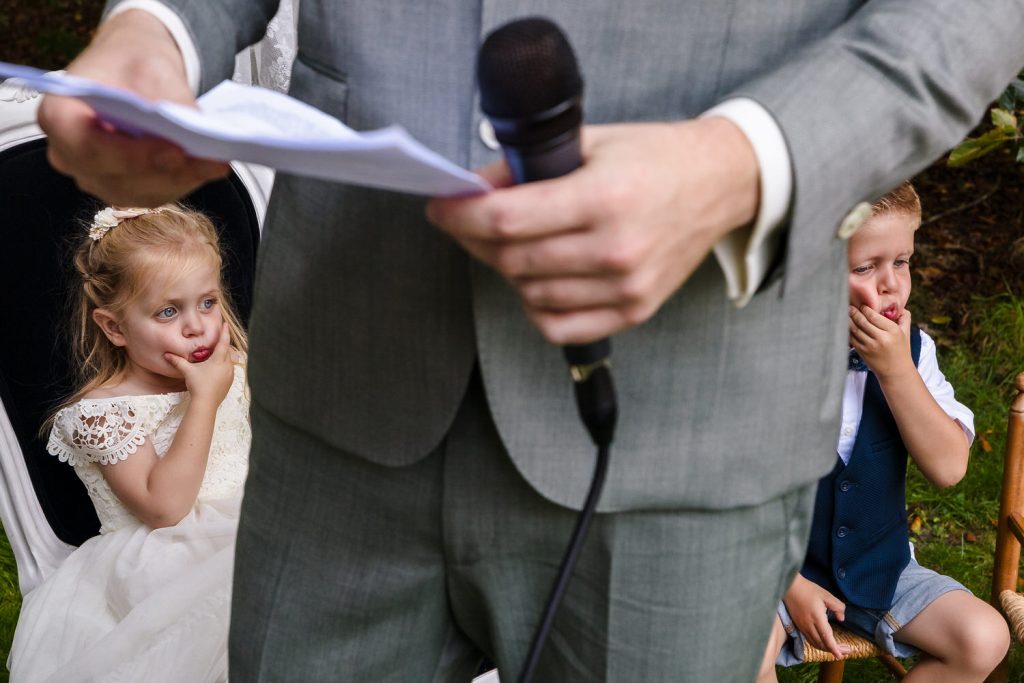
Photo by Jeroen Savelkouls at Landgoed Avegoor, Ellecom, The Netherlands
Tip: Anticipate rather than react and watch for when people naturally fall into rhythm.
5. Capture Synchronized Movement on the Dance Floor
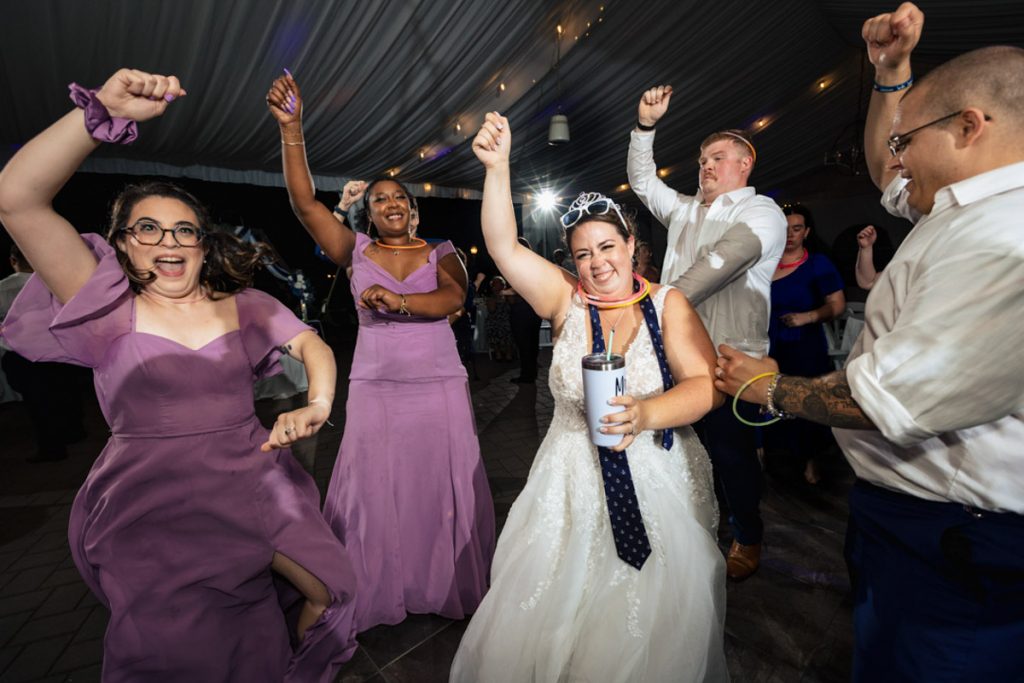
Photo by Gen Palmer at The Estate at Eagle Lake in Chesterfield, NJ, USA
Repetition comes alive during the reception. Group dances, especially when choreographed (noting that choreography is not necessary), offer plenty of opportunities to catch unfolding repetition when everyone hits the same move on the same beat. If your camera has the capability (most do these days), shoot bursts during these moments to increase your chances of catching a frame where the repetition is right on the money.
Tip: Get slightly elevated if possible, holding your camera above your head if necessary, as patterns read more clearly from above. If that isn’t an option, throw yourself into the mix with a wide angle lens.
6. Use Reflections to Double the Pattern
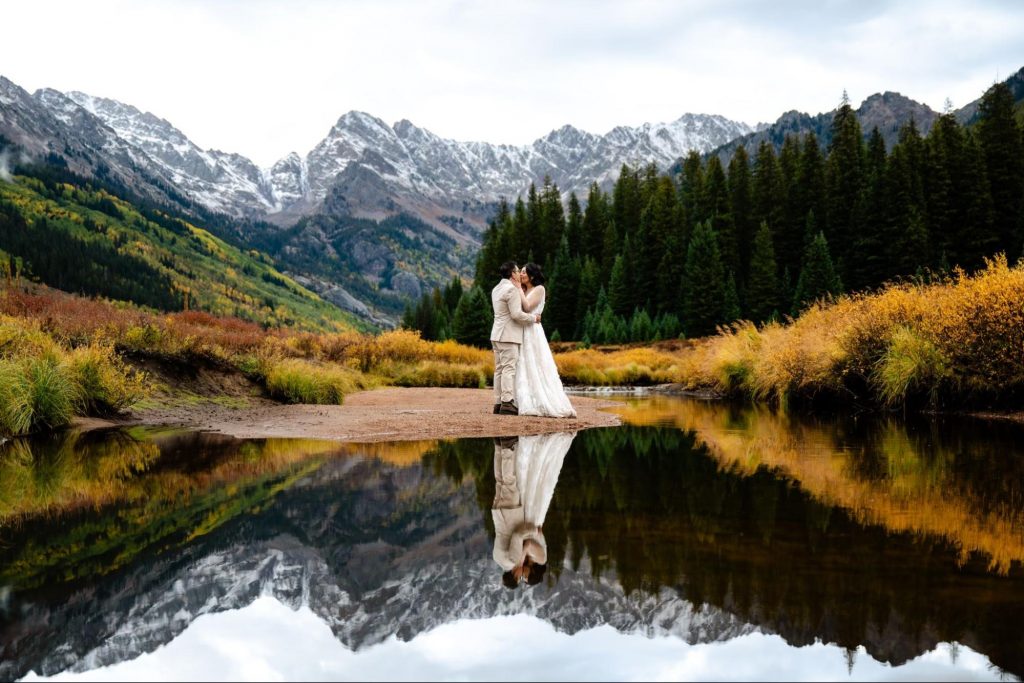
Photo by Authentic Collective at the Piney River Trail in Vail, Colorado, USA
Reflective surfaces make great tools for creating and capturing patterns and repetition. Look for things like mirrors, polished floors, water, or glass to create repetition through reflection. You’ll see this done often near large bodies of water, perhaps with a couple reflected in a lake, for example, but you can get it done a number of different ways, especially when you get creative.
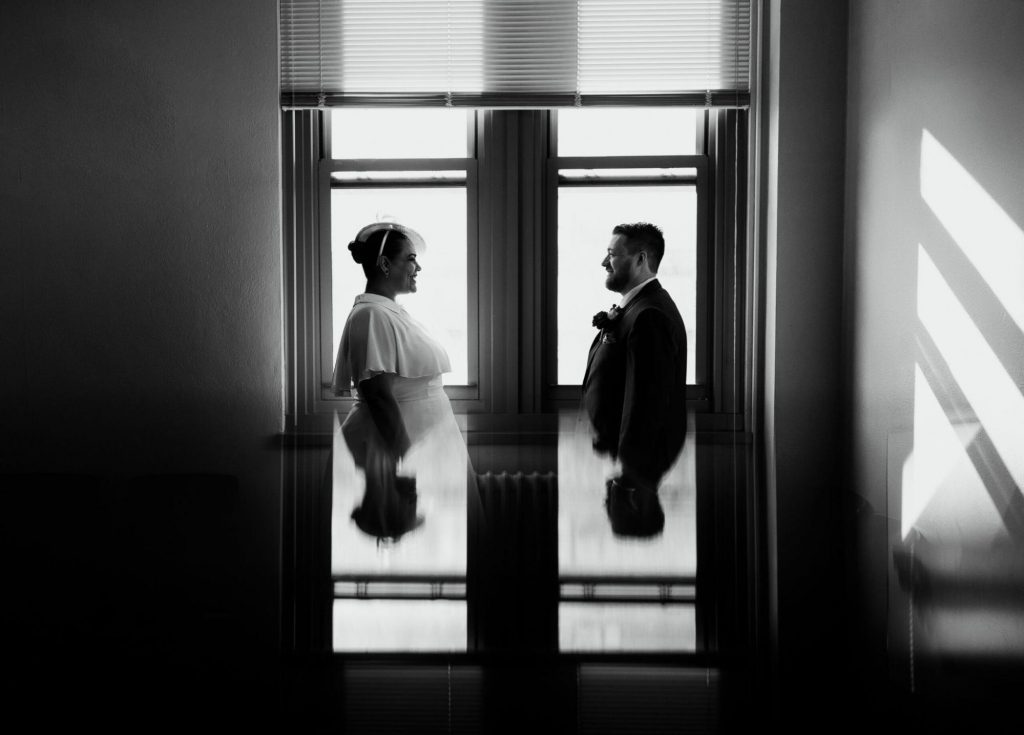
Photo by JCM Photography at the Buncombe County Courthouse, Asheville, NC, USA
Tip: While working patterns and repetition into your frame, don’t be afraid to stack other compositional elements into the shot. In the example above, you can see the photographer also framed the subjects in a window, in the brightest part of the frame, which works in tandem with the creative use of reflection in the image to make it even more visually compelling.
7. Build Repetition with Props and Details
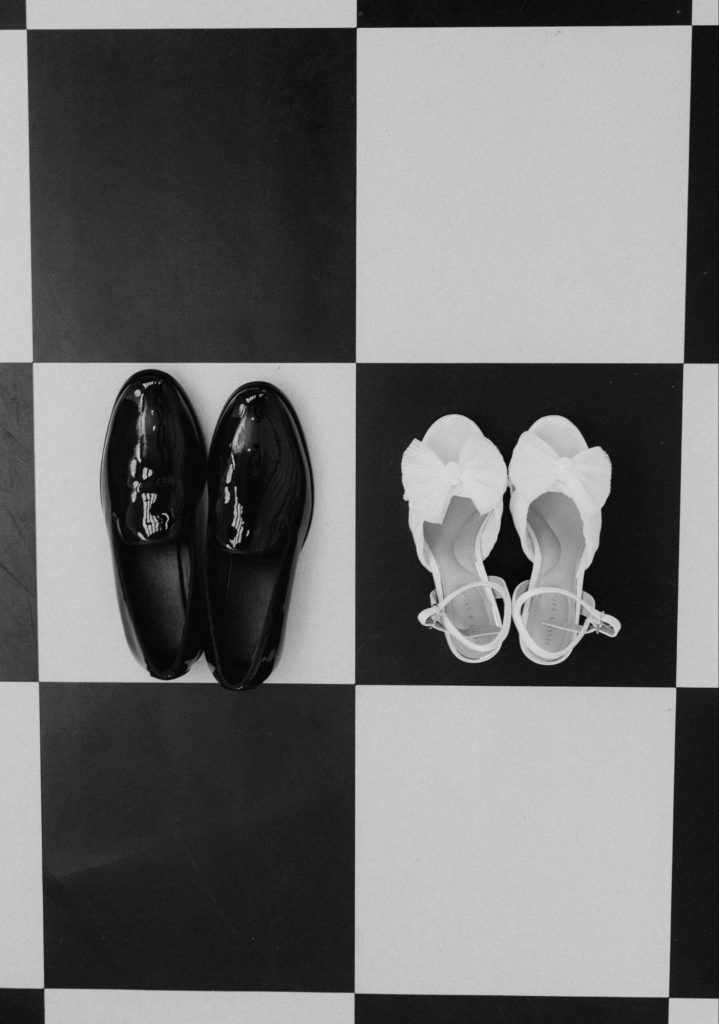
Photo by Citylux Studios at Olio in Peabody, MA, USA
At some venues, you’ll find the patterns reveal themselves, making it easier to take advantage of this concept. You still have to remain alert, though! Keep this in mind when looking for ways to photograph the bride and groom’s details. For example, shoes on patterned tiles, jewelry laid out among repeated textures, florals arranged in a line—all of these details provide an easy means for experimenting with repetition. These images are especially effective in black and white, where form and contrast take priority over color.
Tip: Simplify the frame. Too many competing elements weaken the pattern.
8. Use Posing to Reinforce Patterns
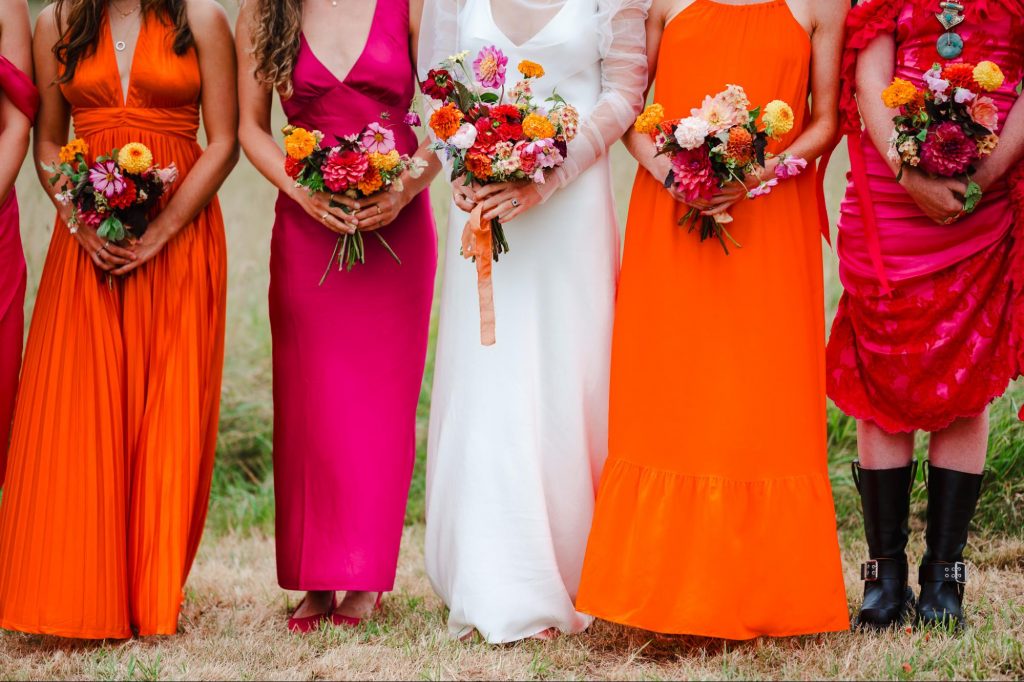
Photo by Jake Timms Photography at Somerset Marquee Wedding in Somerset, United Kingdom
Poses themselves can also create repetition. A row of bridesmaids holding bouquets at the same height, for example, or a couple framed by repeated architectural elements, can benefit from clean, deliberate posing. Minimal movement often works best here.
Tip: Give one clear instruction to the subjects, then let the symmetry (or whichever pattern you’re working into the frame) do the rest.
9. Experiment with Creative or Multiple Exposures
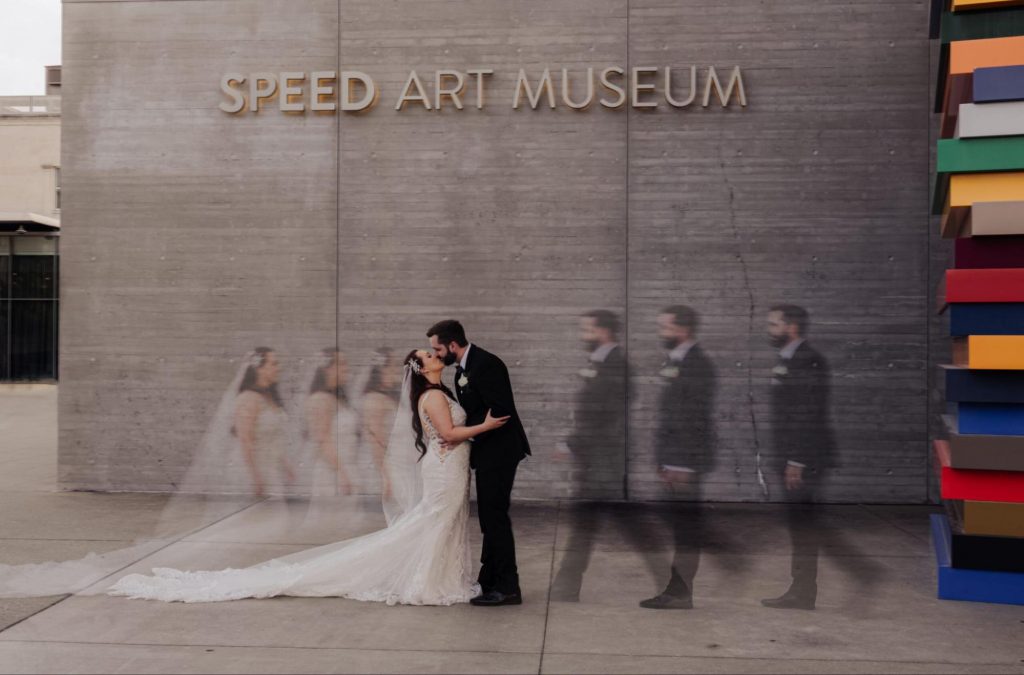
Photo by Green Apple Weddings at the Speed Art Museum in Louisville, KY, USA
Intentional multiple exposures or in-camera layering can create repetition through motion. This technique works well for wowing your clients, and it also makes for some stellar imagery. A couple walking toward each other, appearing multiple times in a single frame, will add storytelling to shot while also showing off your technical skills. It’s a win-win.
Tip: Keep the background simple. This technique works best when the environment isn’t visually loud.
10. Look for Repetition in the Environment
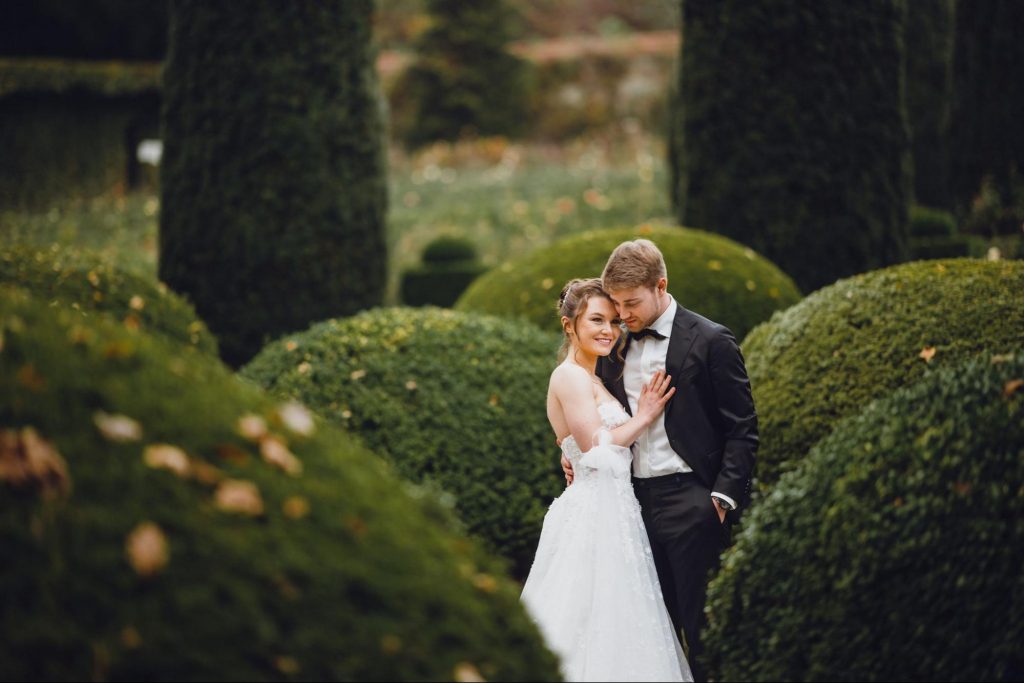
Photo by Andreas Pollok in Schlosshotel Kronberg, Hessen, Germany
Nature often provides repetition through shape, texture, and placement. Rounded greenery, rows of trees, tall grasses, or dense vegetation can frame subjects in a way that feels graphic without being rigid. These settings work especially well for environmental portraits.
Tip: While you might normally position your couple far enough from the background to help the pattern read clearly without competing with them, you can also place them into the mix to add depth to the frame, as illustrated in the photo above.
Final Thoughts
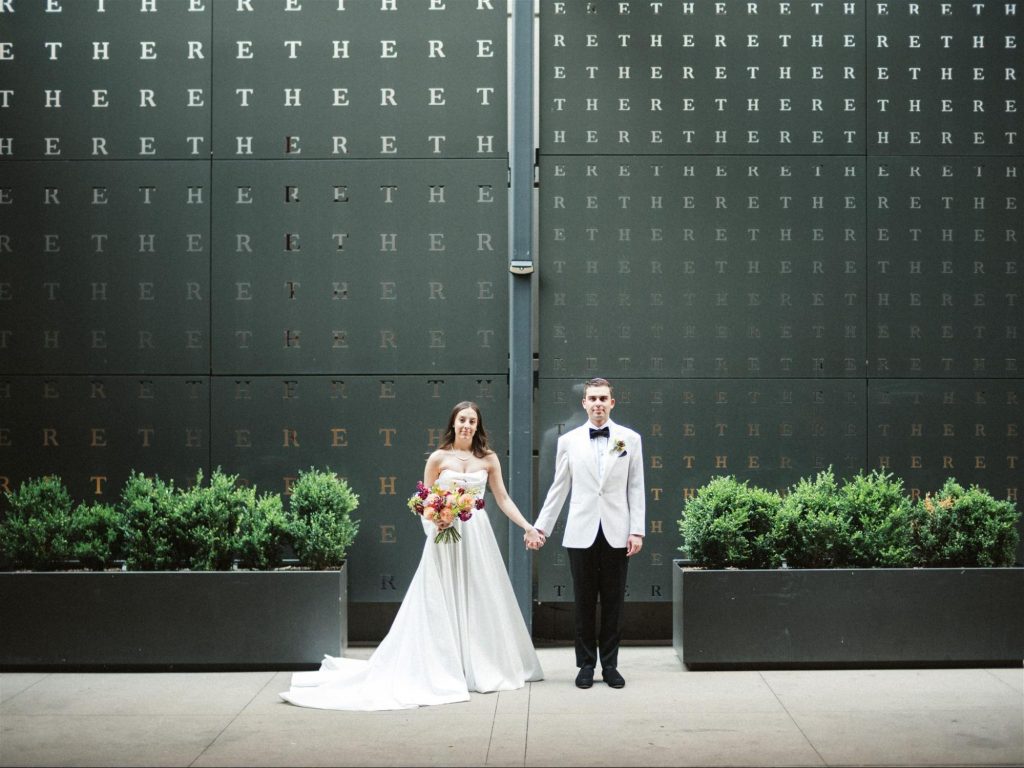
Photo by Francis Sylvest at the Limelight Hotel Denver in Denver, Colorado, USA
Patterns and repetition aren’t about forcing symmetry. Instead, they’re about recognizing visual rhythm as it naturally appears throughout a wedding day. When you train yourself to see these opportunities, your images gain structure, clarity, and impact without feeling staged.
Whether you’re shooting grand architecture or fleeting moments on the dance floor, leaning into repetition helps transform typical scenes into creative compositions. The result is a wedding gallery that feels cohesive, thoughtful, and visually strong with images that stand out not because they’re louder, but because they’re smarter.
Here are some additional images for your inspiration.
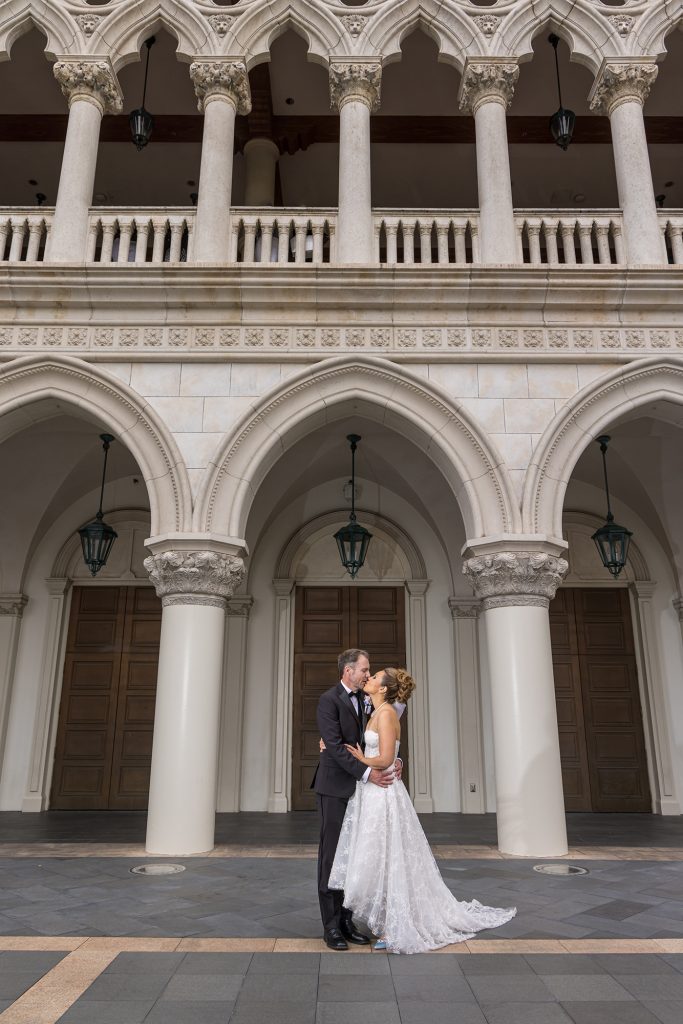
Photo by Elizabeth Victoria at the Venetian in Las Vegas, NV, USA

Photo by Kevin Heslin at the Marriott Hacienda Pinilla, Costa Rica
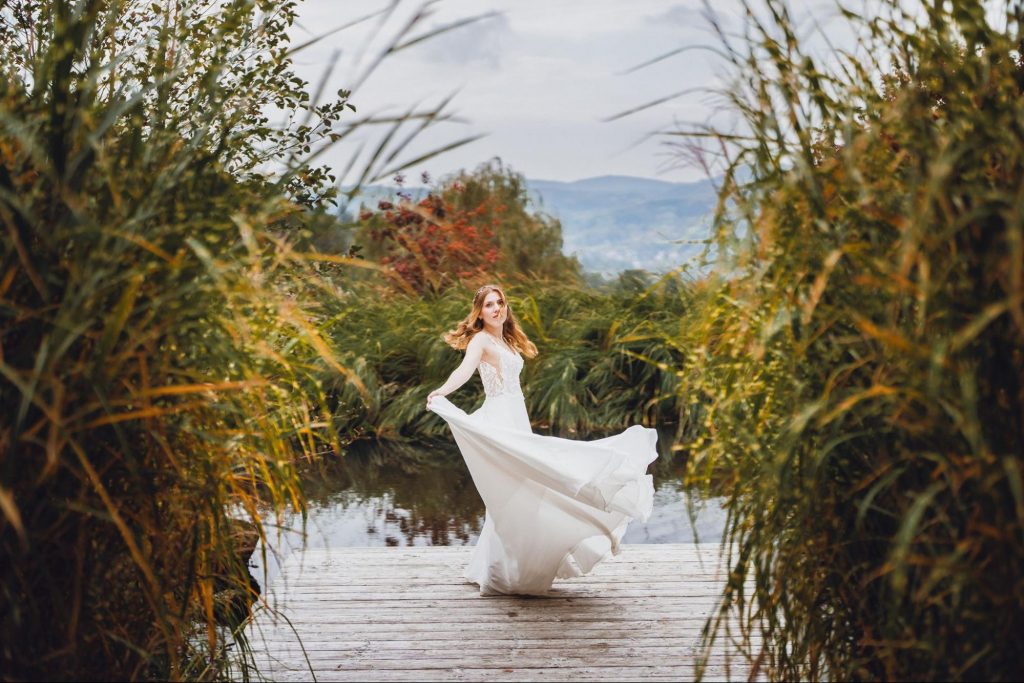
Photo by Andreas Pollok at Hofgut Hohenstein, Hessen, Germany
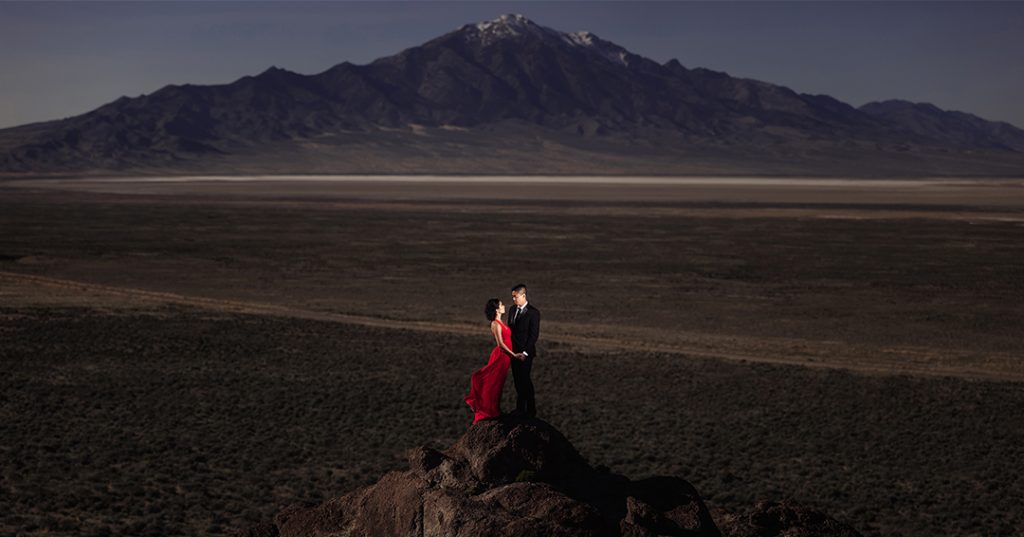
Photo by Lin & Jirsa Photography
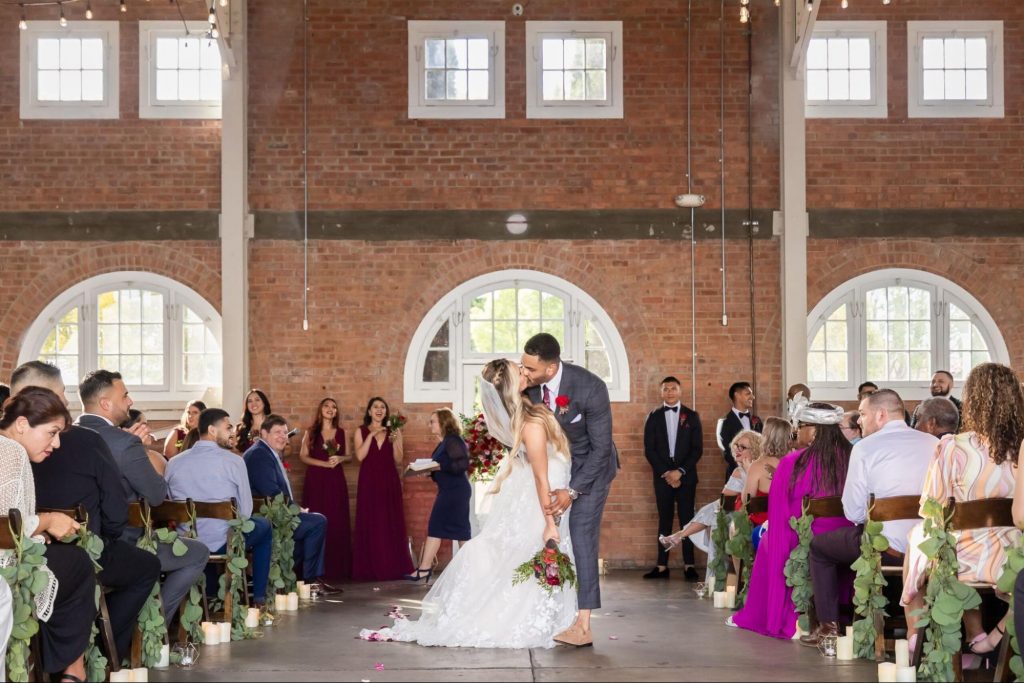
Photo by Luzye Photography at BRICK in San Diego, CA, USA
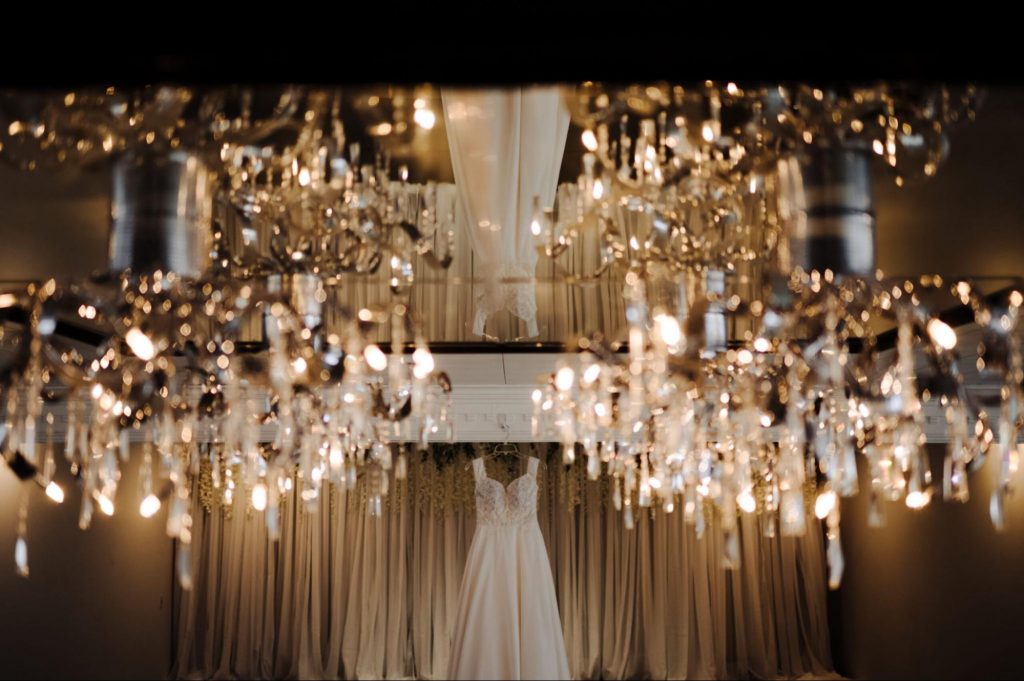
Photo by Green Apple Weddings at Woodhaven Country Club in Louisville, KY, USA
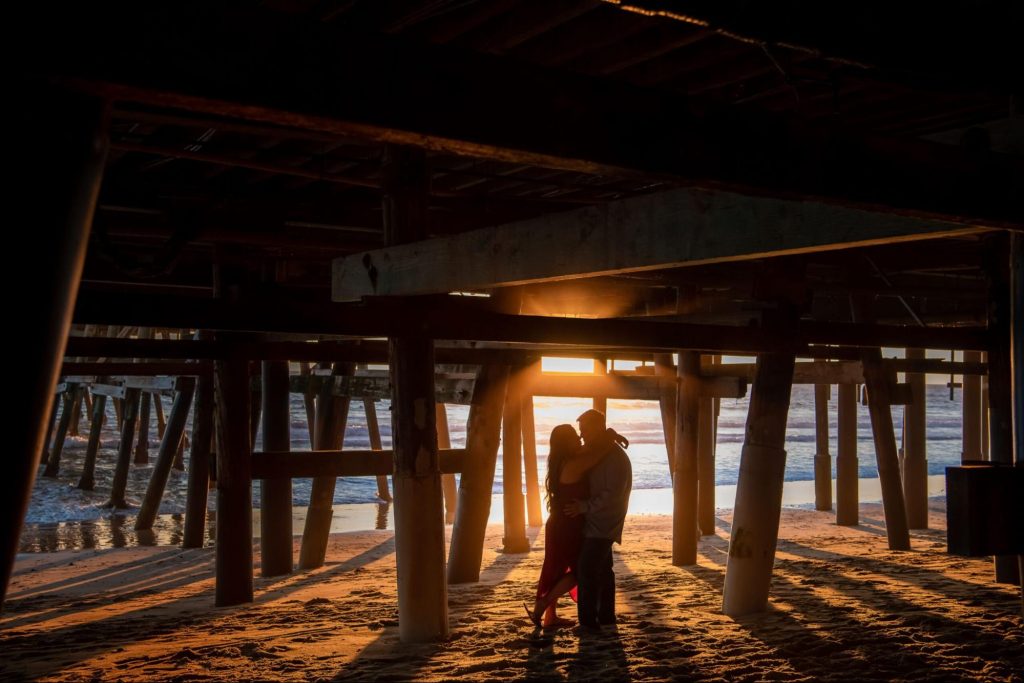
Photo by Luzye Photography at the San Clemente Pier in San Clemente, CA, USA
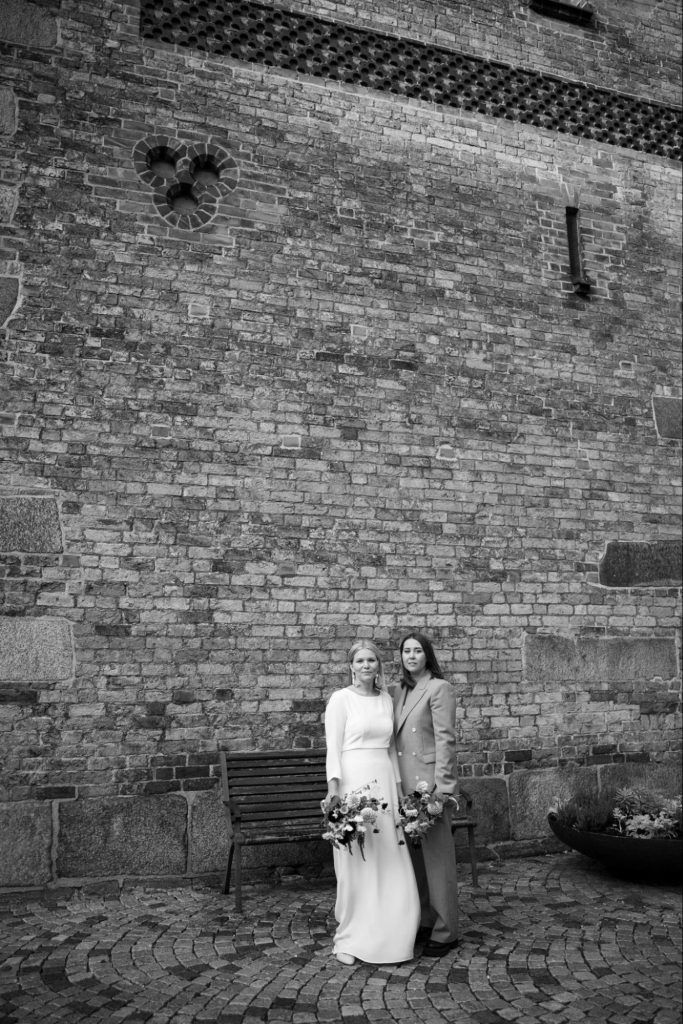
Photo by Tove Lundquist at the Sankt Petri church in Malmö, Sverige
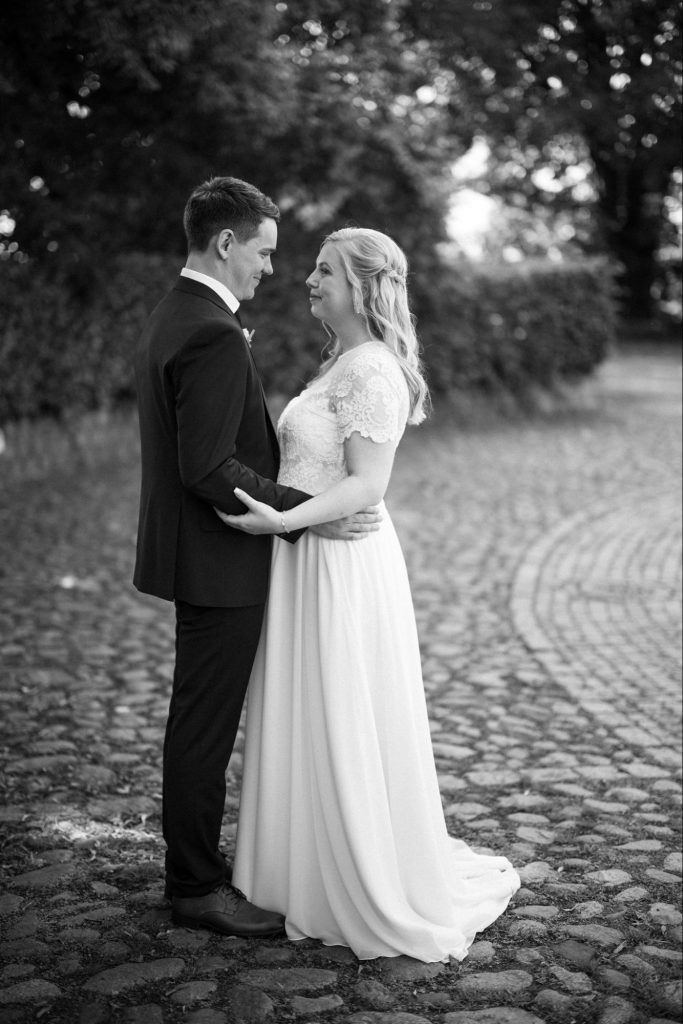
Photo by Tove Lundquist at the Örum 119, Löderup, Sweden
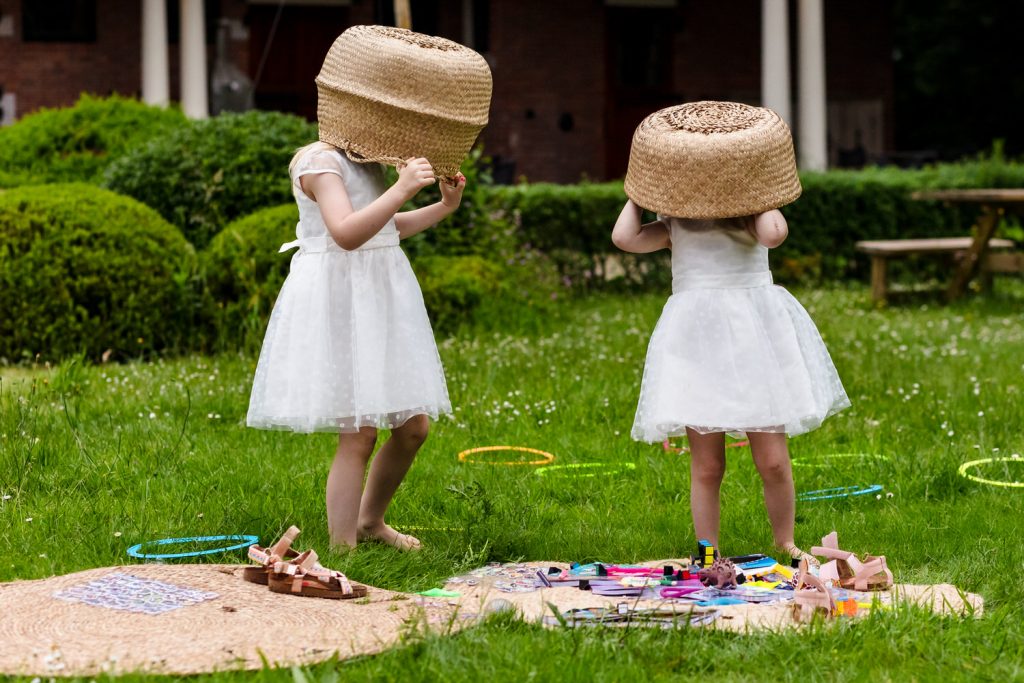
Photo by Jeroen Savelkouls at Landgoed Brakkesteyn, Nijmegen, The Netherlands
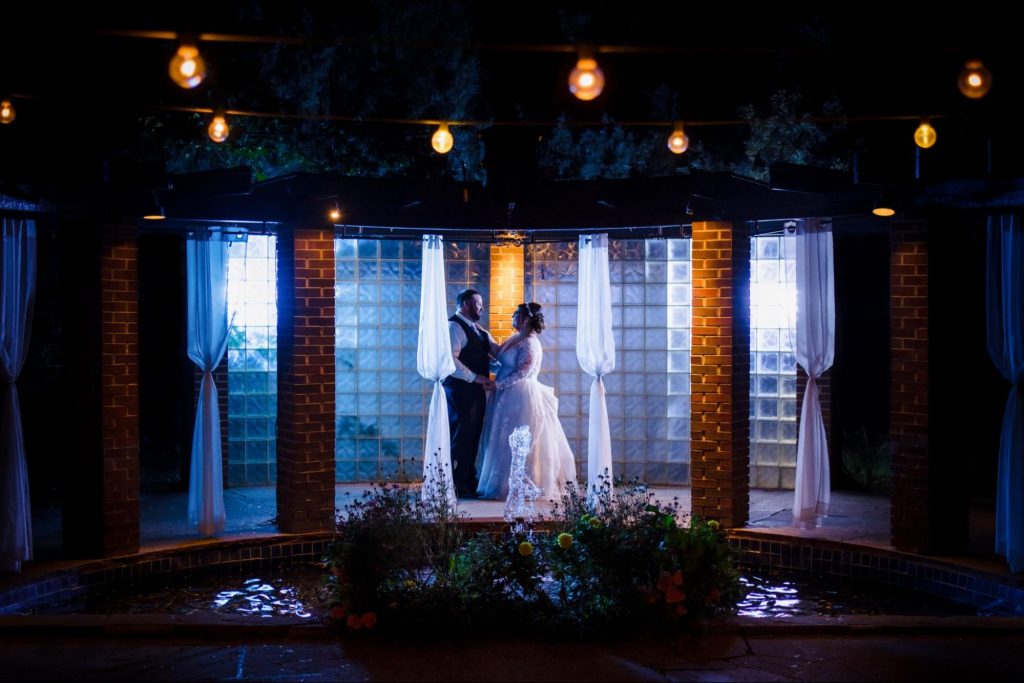
Photo by Gretchen Troop at the Lionsgate Event Center in Lafayette, Colorado, USA
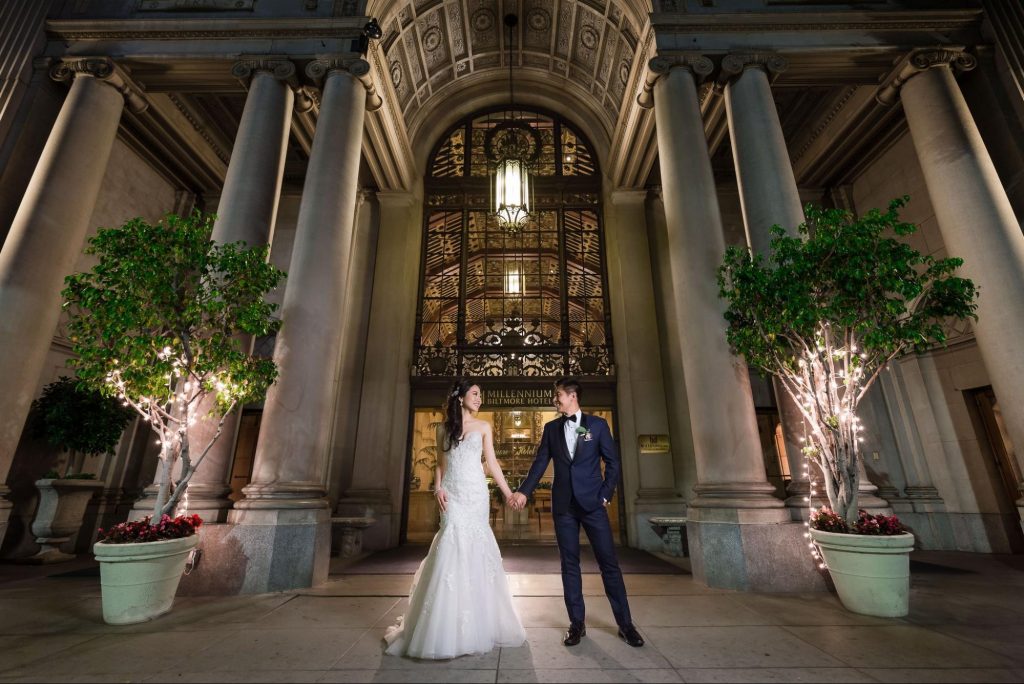
Photo by Stefani Ciotti at the The Biltmore Los Angeles in Los Angeles, CA, USA