
Black Friday has quietly become a big week for photographers. Camera bodies and lenses steal the headlines. However, the unglamorous stuff (your portfolio, website tools, client galleries, e-commerce, etc.) is where steady growth happens.
This is when platforms roll out their best offers. And a smart upgrade can set up your bookings and sales for the next year.
This page covers photography portfolio and website upgrades worth paying for in 2026. As a photographer, learn why these upgrades matter and how to prepare them for Black Friday. Read on.
Why Upgrade Your Photography Portfolio and Website?
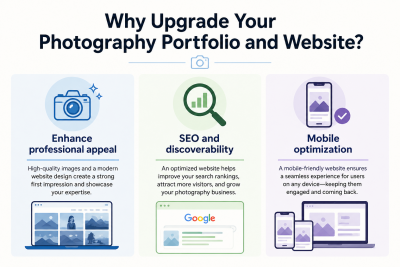
Enhance professional appeal
An updated portfolio does more than show recent work. It tells clients what you’re great at right now and what you want to shoot next.
Your digital photography portfolio is a business tool. Not simply a gallery of favorite work. Updating it regularly helps clients see the kind of projects you want to be hired for.
Design, speed, clarity, and consistency matter just as much as the photos. Likewise, consider:
- Clean layouts
- Readable type
- Easy navigation
- Intuitive menus
All these help people stay longer and explore deeper.
SEO and discoverability
Search engines are still how many clients start their search. If you photograph families in Austin or elopements in Iceland, your site needs to say that clearly. Think:
- Page titles
- Headings
- URLs
- Image alt text
- Copy that reflects your services and locations
To start SEO for photographers, give each page a clear purpose. Descriptive page titles, image alt text, location details, and service-focused copy help search engines understand what you do and help prospective clients find what they need.
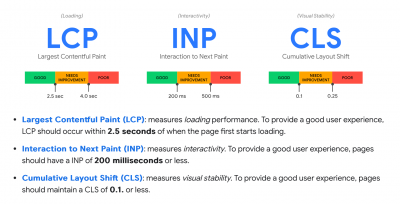
If you need a quick refresher, Google’s SEO Starter Guide covers the basics well. From titles to structured data and internal links. For performance signals and user experience (UX), Google’s Core Web Vitals remain a helpful benchmark:
Mobile optimization
Most browsing is now mobile-first. As of 2026, mobile accounted for nearly 59% of global web traffic. And that trend hasn’t reversed.
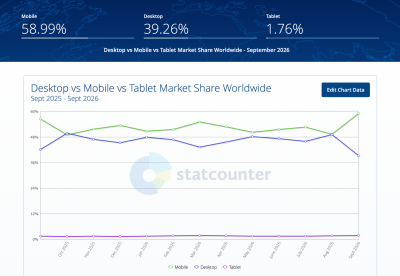
If your site looks great on desktop but stumbles on a phone, you’re losing the majority of visitors before they see your best work. So, factor in the following:
- Mobile-friendly templates
- Responsive images
- Tap-friendly buttons
- Quick load times decide
All these decide whether a busy couple on a lunch break reaches out or bounces.
If you’re doing a refresh this Black Friday, make sure your platform handles responsive design by default. Make sure it supports next?gen image formats like WebP or AVIF for speed.
How To Prepare Your Portfolio and Website Upgrades for Black Friday
Considering essential site features
1. Factor in e-commerce capabilities
Selling directly through your site keeps the experience consistent and your margins healthier. When prints, digital files, galleries, and booking options live in one place, clients can complete purchases more quickly and easily.
For example, photographers who sell branded merchandise can take inspiration from ecommerce stores offering custom sweatshirts. Offering prints and digital downloads, along with merchandise, directly through their websites gives customers a convenient way to browse and buy in one place.
Print and product sales with flexible pricing matter. So do digital downloads with license options, client galleries with proofing and favorites, retainer invoices or package checkout, and booking or scheduling integrations. Discount codes and automated sales tax (where available) round things out.
2. Consider advanced security features
Trust is everything when clients share and sell photos online. Not to mention payment info and personal details.
At minimum, your site needs HTTPS with a valid SSL certificate and secure payment gateways. Major browsers have labeled non?HTTPS sites as “Not secure” for years now, which can spook clients fast.
If your platform offers clients?only galleries, password protection, expiring links, watermarking, and controlled download permissions, it shows clients you run a careful and professional operation.
From a marketing and business operations perspective, protecting customer information is vital to building trust and maintaining a professional reputation.
Jason Ledbetter, Operator at Jason Ledbetter, highlights why security should be part of every business’s online experience.
Ledbetter says, “Website security is more than a technical requirement. It helps customers feel confident sharing personal information and completing transactions.
“For photographers, secure galleries and trusted payment systems can reassure clients that their photos and information are in safe hands,” he adds.
3. Integrate AI and automation tools
This is the year to automate what you can while you keep the creative wheel. Helpful additions include:
- AI image tagging or smart search in client galleries
- Automated SEO helpers that suggest titles and alt text
- Smart image optimization (WebP/AVIF, lazy loading) for faster pages
- Chat widgets or guided inquiry forms to answer FAQs and route leads
- Workflow automations for gallery delivery, abandoned carts, follow-ups.
Heed our advice: use AI for repetitive tasks. But keep in mind: you’re still the art director.
Smart home technology offers a good example of how automation can reduce repetitive work. Smart home devices like a pool cleaning robot handle routine pool care and maintenance without supervision. This frees homeowners’ time…much like AI can free photographers from repetitive editing tasks!
The goal? To spend less time on manual tasks and more time creating work that sets your photography apart
Evaluating black friday deals
4. Understand true value
Not all discounts are equal. Some look huge up front, then cost more over a year. A lower price has limited value if the platform creates extra work or lacks the tools you need to grow.
Questions to ask:
- What’s the renewal price vs. first?year discount?
- What are the storage, bandwidth, and gallery limits?
- Are there transaction fees and print lab commissions?
- Which features are included vs. paid add?ons (client galleries, store, booking)?
- What are the support hours and response times?
- Can you export your data if you ever need to move?
- Do they have real examples of page speed and Core Web Vitals performance?
This principle holds across industries. In aged care and disability services, choosing the right technology also means looking beyond the initial price, as Conrad Wang, Managing Director of EnableU, explains.
Wang says, “An affordable solution isn’t always the most cost-effective one. Businesses should consider whether a platform can support their day-to-day operations… even adapt as their needs change and deliver reliable service over time.
Wang concludes, “Looking at the full cost of ownership helps avoid paying more later for missing features or unnecessary work.”
5. Look for bundles with long-term savings
Black Friday is a good time to bundle. Annual plans often include a free year of a domain or a reduced rate on client galleries and stores. If you’re fairly sure about a platform, an annual plan can lock in savings and keep your costs predictable.
Bundling isn’t unique to photography. In telehealth, for instance, services like TRT online combine consultations, lab work, and prescriptions into a single membership so patients aren’t juggling separate providers and fees. Photographers can apply the same logic by bundling galleries, storage, and CRM tools into one annual plan.
That said, grab complementary tools while they’re discounted (backup storage, a blog content planner, or a lightweight CRM) to round out your workflow.
Best Portfolio and Website Platforms for Photographers
It’s best to consider one of the best website builders for a photography portfolio. That said, take a look at some of the popular platforms most photographers rely on today:
| Top Websites | Key Features |
| Pixpa |
|
| Squarespace |
|
| Wix |
|
| Format |
|
| SmugMug |
|
| Zenfolio |
|
| PhotoShelter |
|
| WordPress (self-hosted) |
|
What you shoot often dictates the best fit:
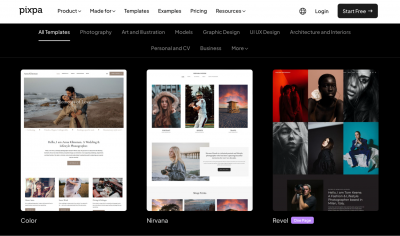
- Weddings and events – need private client galleries and easy print/digital sales. Platforms like Pixpa, SmugMug, Zenfolio, and PhotoShelter shine here.
- Portraits and studios – benefit from online booking integrations, session info pages, and package options. Squarespace and Wix can balance a good-looking portfolio with practical business pages.
- Commercial and editorial photographers – may want more control over layout and SEO. WordPress can be powerful if you’re comfortable maintaining it. PhotoShelter and Format offer editorial-friendly presentations.
- Fine art and landscape photographers – should focus on color-accurate displays and high?res image handling. Squarespace and PhotoShelter both support strong presentations plus sales.
No matter the platform, weigh the full picture:
- Template quality
- Site speed
- Storage limits
- Gallery experience
- Sales fees
- Support response times
- Export/migration options
As an insanely productive photographer, choosing a platform is a long-term relationship…make sure it can grow with you!
Final Thoughts
Black Friday is a great time to level up the parts of your photography business that quietly drive revenue:
- Your portfolio
- Your website.
That said, you don’t need every new feature. You do need the right ones, built on a platform that won’t slow you down next spring when calendar requests and gallery deliveries stack up.
If you only tackle a few things this season, make sure your sites are fast. Make sure they’re crystal clear about what you offer and where. More importantly, make sure they’re easy to buy from or inquire about.
Heed our advice: search visibility starts with basics done well. Ultimately, the best Black Friday deal is the one that helps you work smarter in January. Not just save a few dollars in November!
If you need assistance in getting your portfolio website ready for Black Friday, Pixpa can help. Sign up today to start your free trial!
Author bio: Brooke Webber is a passionate content writer who loves storytelling. She has six years of experience crafting compelling narratives that resonate with audiences across industries. A total coffee addict, she immerses herself in literature in her spare time.